Here's all the stuff I do.

Design Optimization for Advanced Manufacturing

Research Projects
Metal AM

Design optimization for metal additive manufacturing (AM) using novel truss-type supports.

CAD Reconstruction

Geometric Post-processing of Topology Optimized Design based on End User Applications.

Geometric Modeling

Modeling of implicit lattices (Triply Periodic Minimal Surfaces, TPMS) for multiple applications.

Metal Additive Manufacturing
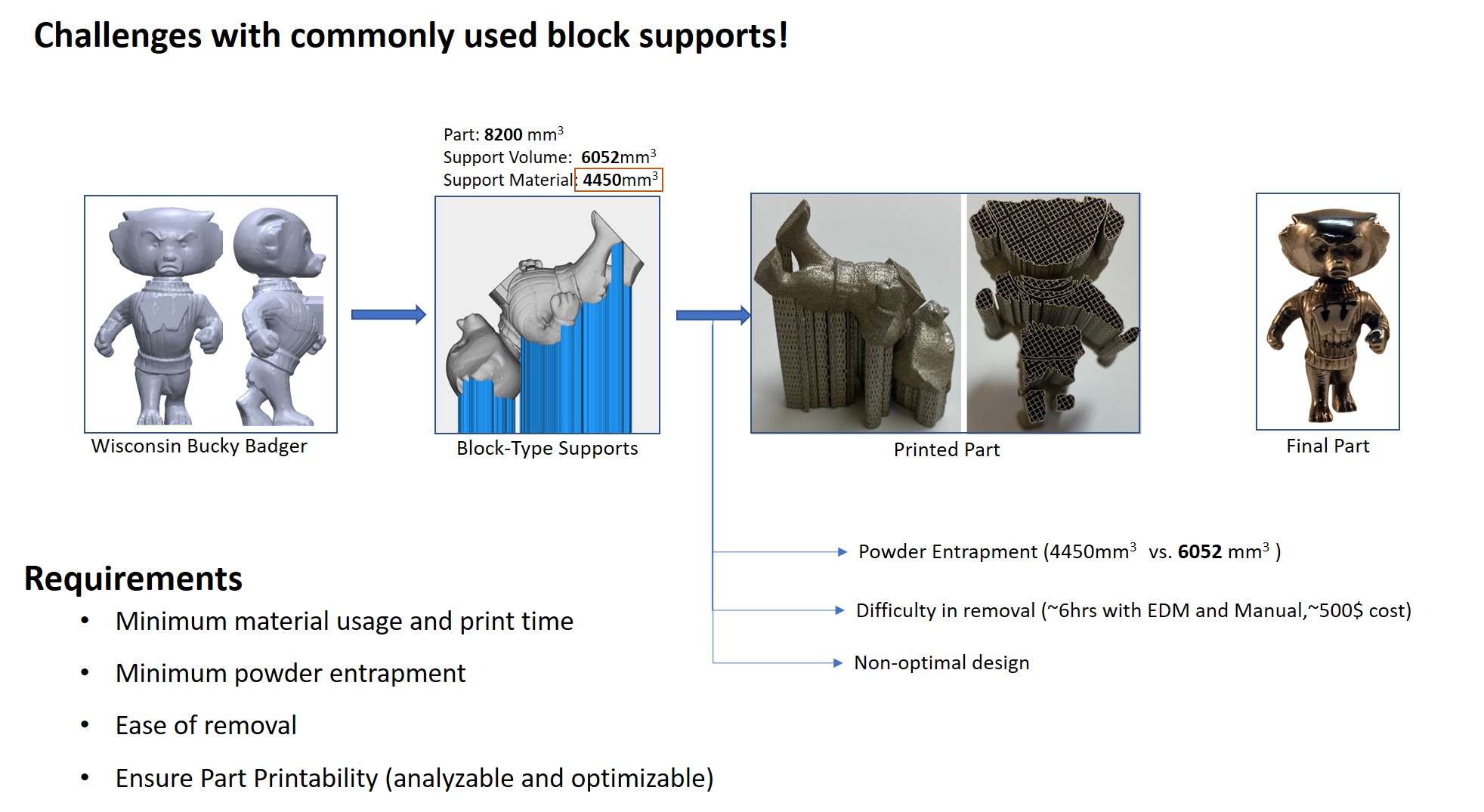
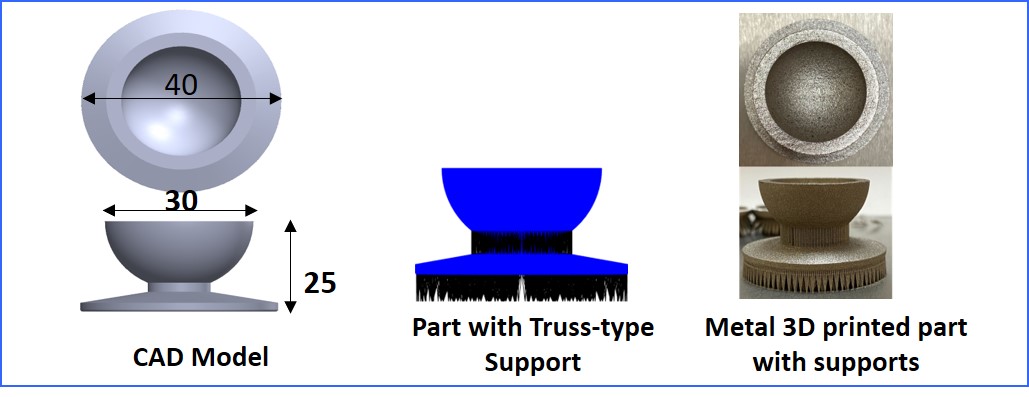
Support structures are necessary evils in metal additive manufacturing. Unlike polymer based printing, where supports are purely structural components, in metal additive manufacturing, these supports act primarily as paths for heat transfer from melt pool to the build plate. They also hold part in place against the recoil pressure during laser melting. However, the commonly used supports are non-optimal, difficult to remove and contribute to significant amount of material wastage due to powder entrapment.


Truss-type Supports for LPBF Metal AM
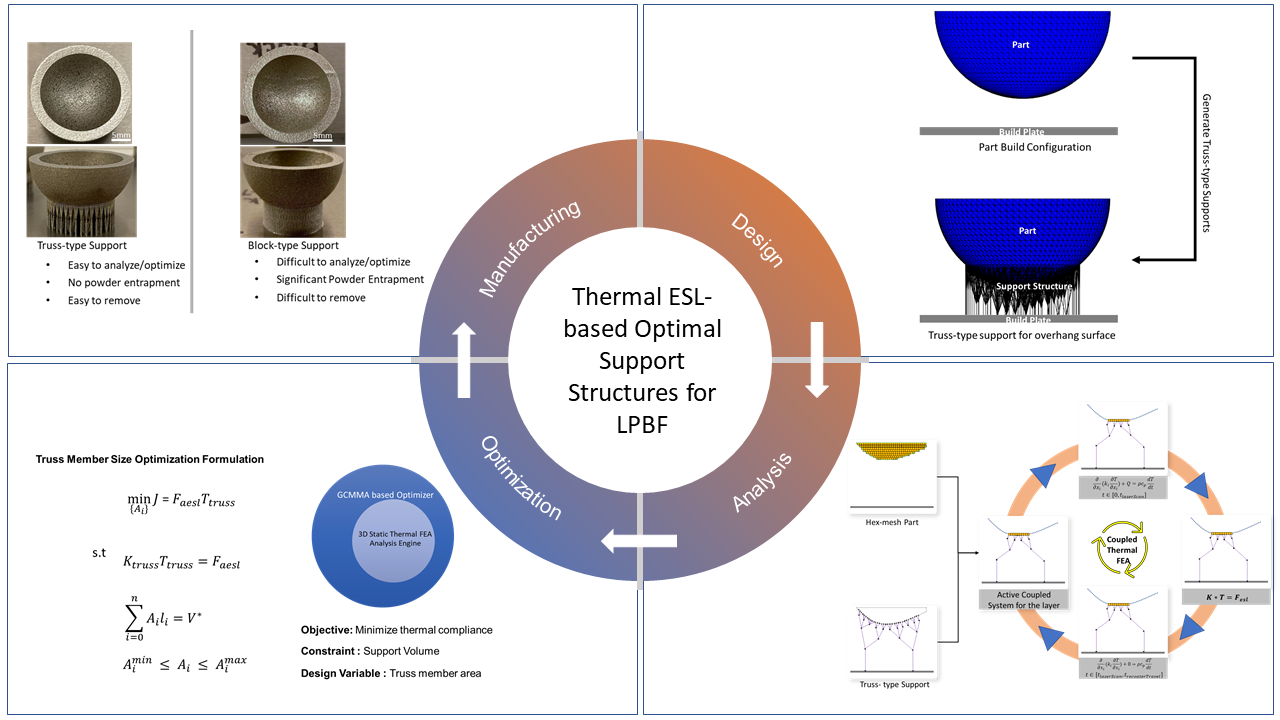
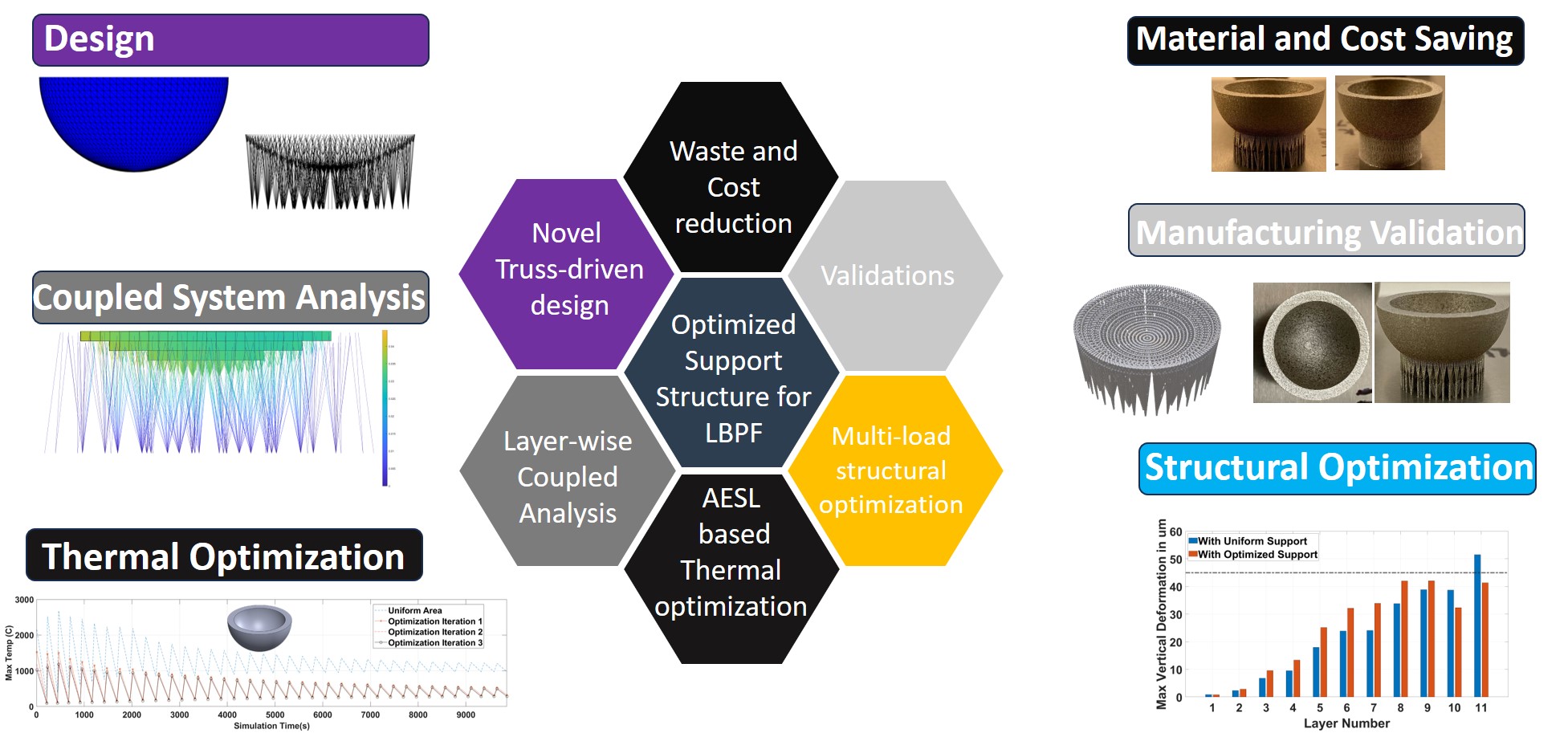
We came up with the idea of using thin truss-type supports were designed, analyzed and optimized to account for time-dependent thermal loads. These supports were optimized for better thermal behavoir during each layer-wise metal deposition. Manufacturing validations were carried out for parts with different complexities to demonstrate the advantages of these optimized in comparison to the commonly used block type designs. These supports did not entrap any powders, saving over 80% of metal powder. These supports were then used for structural deformation minimization of parts being printed. Multi-load structural optimization was carried out for the coupled system where, part and supports were analyzed in tandem. Recoater collision and part deformation were minimized to allowable limits using the optimized supports. These were funded by US NAVY and US ARMY Grants. Check Publications for more details.
CAD Reconstruction

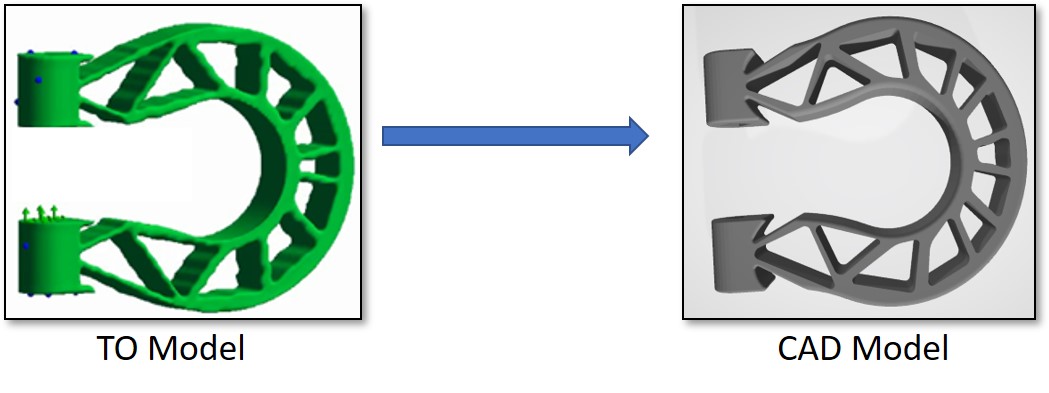
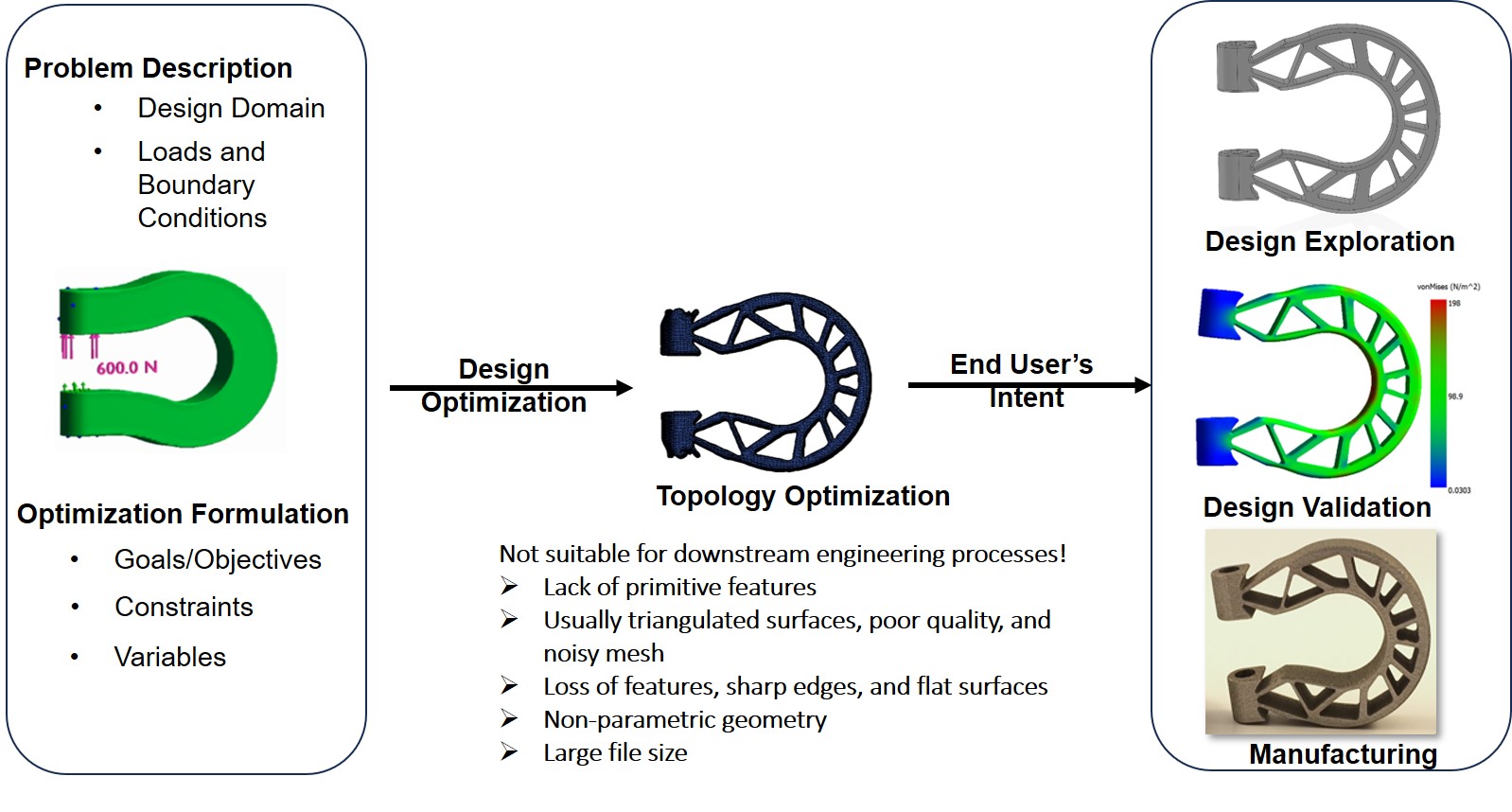
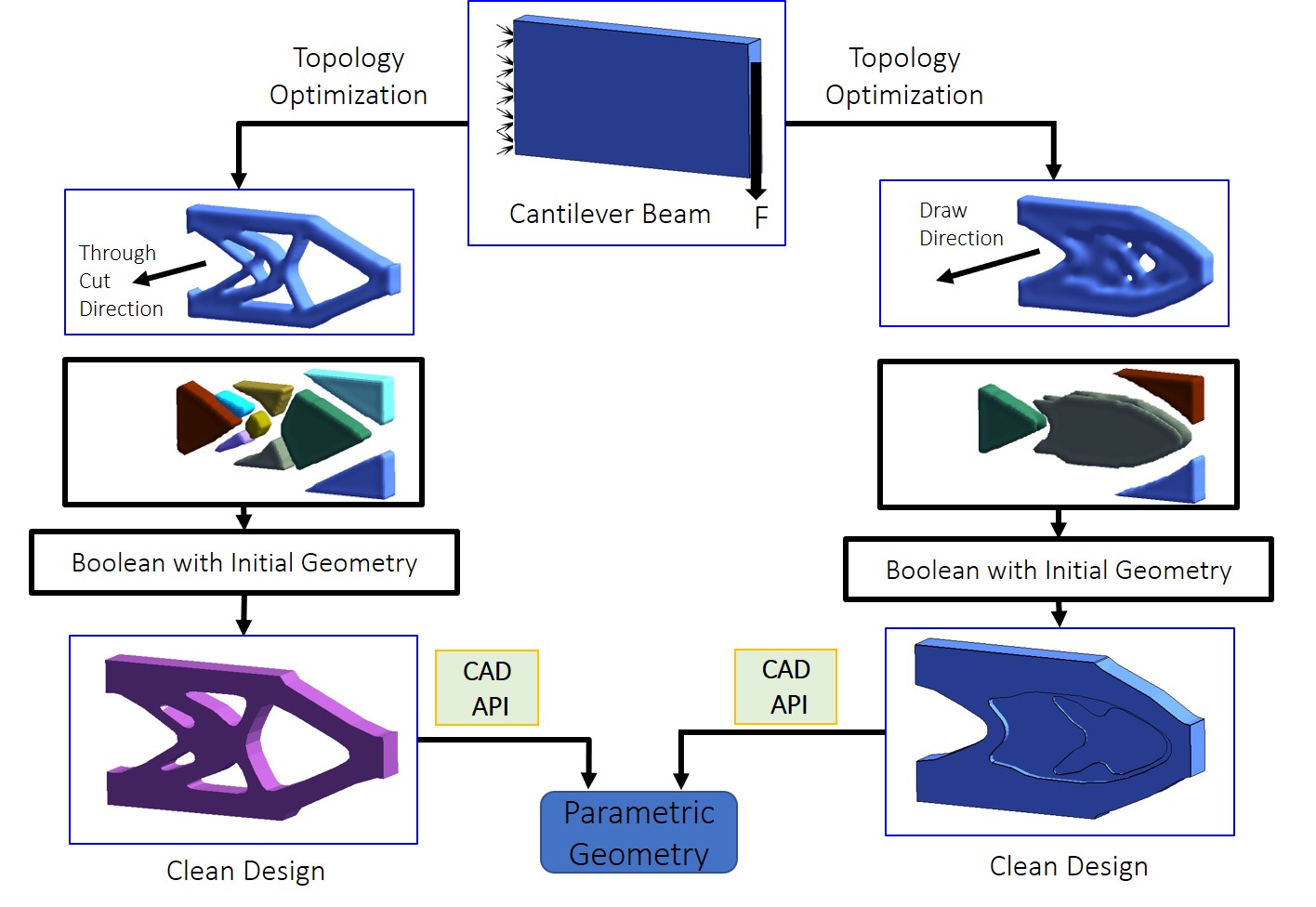
Topology optimized models need further post-processing to actually realize end user's intent. Rough surfaces, non-parametric model, large file size,.. etc are some of the challenges with the TO designs. We reviewed all the existing approaches to addressing these issues, categorized them based on their underlying representations and also proposed applicable solution for small subset of problems. For 2D and 2.5D problems, boolen of initial geometry with negative components can be used to create parametric geometry.The research was funded through NSF grant. Check Publications for more details.
Projects

Formula 1 Upright Optimization

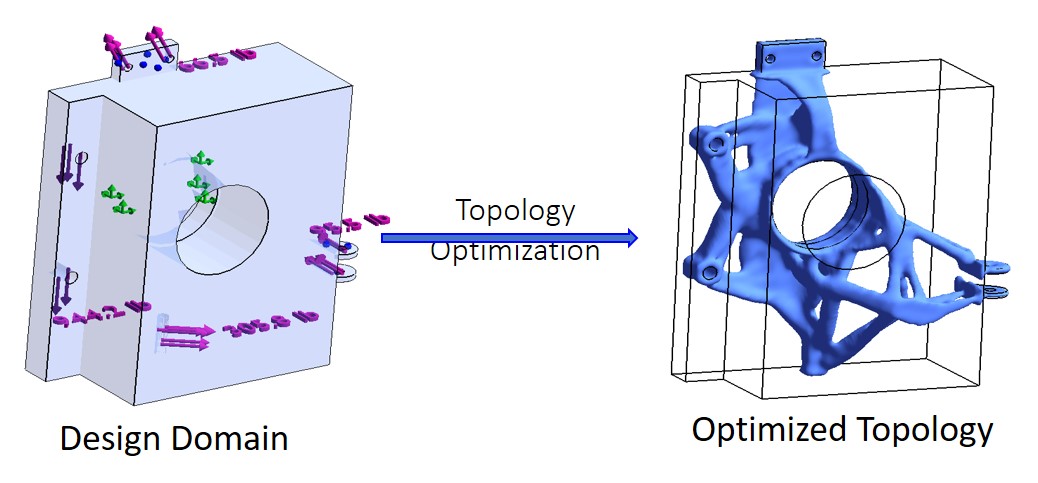
Design optimization of Formula 1 suspension upright subjected to different cornering and braking loads at different instances of time. The problem was modeled as a multi-load problem where the final optimized geometry needs to satisfy all different loads and boundary conditions. Topology Optimization was carried out in Pareto while CAD reconstruction was done using Rhino. The final volume fraction achieved was 10% of the original design domain. It was a part of a USACM Thematic Conference at the Topology Optimization Roundtable 2019 hosted by Sandia National Lab.

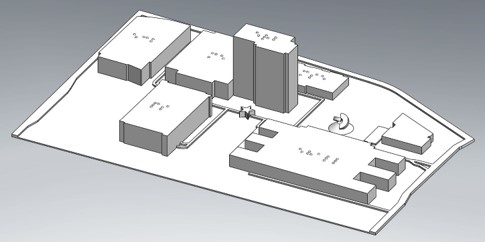
3D Printed Tactile Maps

3D printed Tactile maps with braille for blind and visually impaired individuals. Simplified 3D CAD models are created using 2D maps. These models are then printed using FDM printers with utmost resolution conforming to guidelines by ADA. Multiple iterative designs were considered based on feedback from McBurney Disability Resource Center (UW-Madison), Wisconsin Council for the Blind and Visually Impaired, and individuals with visual impairments. The maps are currently being tested at the College of Engineering, UW-Madison with further extension to larger campus.

Ceramic 3D Printing Simulations

Predicting in-process ceramic 3D printing failure investigation through simualtions. Ceramic 3D printing is a unique process considering the feedstock material and material deposition process. Soft clay is pushed through extruder over the g-code defined paths. As soon as the material extrudes out, it begins passive cooling in the ambient temperature. A physics-based clay printing simulator was designed to simulate the passive drying process of ceramic 3D printed parts. Computational model incorporated moisture diffusion phenomenon during for part printing process in conjunction with the G-code, that dictates the path of material extrusion.